
Conflict is an inevitable part of human communities, stemming from differences in perspectives, values, and lived experiences. In today’s polarized world, these tensions have become more pronounced, fueled by discriminatory policies that target minorities and embolden harmful behaviors. Whether in physical reality (PR) or virtual spaces like social VR, communities grapple with a critical challenge: how to manage conflict while fostering inclusivity, equity, and resilience.
Traditional systems of justice—whether punitive, reparative, or transformative—offer pathways for addressing conflict. Punitive justice focuses on enforcing boundaries and deterring harmful behavior through penalties, such as bans or sanctions. Reparative justice seeks to heal relationships by fostering accountability and dialogue between those harmed and those responsible. Transformative justice goes further, aiming to address the systemic and cultural conditions that allow harm to occur in the first place, encouraging long-term change.
However, in virtual spaces, these systems face unique challenges, amplified by cognitive and cultural dynamics that hinder growth and understanding. Key among these dynamics are black-and-white thinking, zero-sum mindsets, and the rigid enforcement of zero-tolerance policies. Together, these forces often create environments where division is entrenched, rather than resolved, and the potential for growth is stifled.
In social VR, these challenges unfold in real-time, shaped by creators, builders, moderators, community leaders, and developers who collectively define the culture and norms of virtual spaces. To move forward, we must address the underlying cognitive traps that drive conflict, rethink rigid punitive systems, and explore how VR can be used as a tool for fostering conflict resiliency through experimentation, empathy, and dialogue.
Black-and-White Thinking and Zero-Sum Mindsets
Black-and-White Thinking and Zero-Sum Mindsets
Compounding the challenges of conflict in social VR is the prevalence of black-and-white thinking and zero-sum mindsets. Black-and-white thinking oversimplifies complex issues into binaries—good versus evil, right versus wrong—making it harder for individuals to empathize with perspectives that differ from their own. In this oversimplified worldview, there is little room for nuance or understanding, and conversations often collapse into accusations, defenses, and polarization.
For example, consider a group of content creators who refuse to collaborate with community leaders because the leaders have chosen to use AI-generated art in their projects. From the creators’ perspective, AI art is unethical, undermining traditional artistry and threatening their craft. However, in their rigid opposition, they fail to ask critical questions: Why did the community leaders choose AI art? Could their own expertise help elevate the project to meet artistic standards? What unique skills might the community leaders themselves bring to the collaboration, even beyond artistic elements?
In assuming the worst about the leaders’ intentions, the content creators miss an opportunity to engage meaningfully and find a shared vision. They disregard the fact that community leaders often bring invisible soft skills—such as mediation, organizing, and creating inclusive environments—that are essential for fostering growth and connection. This refusal to collaborate reinforces division rather than encouraging dialogue, perpetuating the cycle of mistrust.

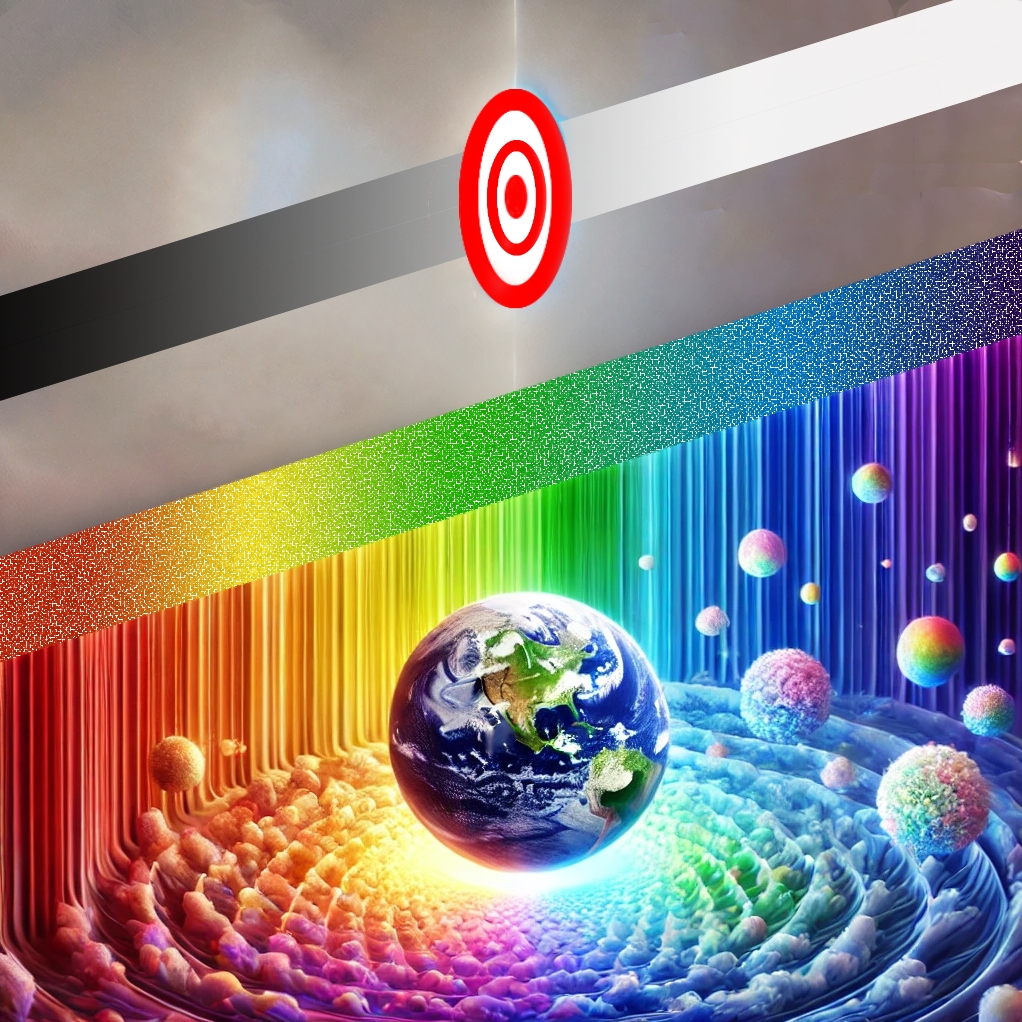
This image was generated with AI. It was also significantly edited and designed with a value of iteration – Get the visual concepts in place, and when artists want to support and improve on it, it will be replaced! 1
Similarly, a zero-sum mindset assumes that one group’s gain comes at the expense of another’s. This perspective often fuels conflict, as individuals see inclusivity or equity as a threat to their own standing. For instance, efforts to amplify marginalized voices in VR might be misinterpreted as silencing others, creating unnecessary division.
These mindsets are particularly dangerous in virtual spaces, where anonymity and rapid interactions amplify knee-jerk reactions and tribal behavior. The ease of blocking, muting, or reporting users, while useful in moderation, can sometimes further entrench “us versus them” dynamics by enabling users to retreat into echo chambers rather than engaging constructively.
Left unchecked, black-and-white thinking and zero-sum perspectives polarize communities, making productive dialogue nearly impossible. For example, users who view debates as contests of moral superiority often derail discussions, reducing opportunities for meaningful connection or understanding.
Addressing these cognitive traps requires a deliberate effort by platforms and communities to foster more nuanced thinking. Encouraging empathy, curiosity, and dialogue can help participants move beyond binary thinking and see conflicts as opportunities for growth rather than battles to be won. Tools like conflict simulation scenarios in VR could provide safe spaces to rehearse constructive approaches to disagreement. By reframing binary assumptions into more complex, cooperative problem-solving efforts, users can better navigate the gray areas of human interaction.
Zero-Tolerance Policies and the Black-and-White Trap
Stemming from standards of practice with 2D online community management, social VR platforms also succumb to these cognitive traps, where many rely on zero-tolerance policies as their primary tool for addressing conflict. While these policies can create an immediate sense of order, they often perpetuate the very issues they aim to resolve.
The Zero-Tolerance Dilemma
Zero-tolerance policies prioritize swift action—such as banning or muting disruptive users—to create a sense of safety and enforce clear boundaries. At their best, these policies protect marginalized groups from harm and send a clear message that certain behaviors will not be tolerated. However, they often come with unintended consequences.
When applied too rigidly, zero-tolerance policies can inadvertently silence marginalized voices, create resentment among those punished, or fail to address systemic issues driving the conflict. For instance, a user banned for expressing a controversial opinion may feel excluded, leading them to seek echo chambers elsewhere rather than reflecting on their actions. This exclusionary approach often reinforces black-and-white thinking and zero-sum dynamics, deepening divisions within communities.
The Tolerance Paradox
Coined by philosopher Karl Popper, the tolerance paradox highlights the challenge of managing harmful ideologies in inclusive spaces. If tolerance is extended to intolerant behaviors, it risks enabling the destruction of tolerance itself. In VR, this paradox plays out in decisions about whether to permit offensive speech in the name of free expression or to ban it to protect marginalized groups.
Navigating this paradox requires a careful balance between inclusivity and safety. While platforms must set firm boundaries against harm, they also need to create pathways for education, accountability, and transformative growth. This is where VR’s potential as a dreaming tool becomes critical—it allows us to experiment with how to address intolerance in ways that build resilience and understanding.
The Ripple Effect of Political Discord in Social VR
Discrimination Spills into Digital Spaces
Discriminatory laws and rhetoric in PR don’t stop at physical borders; they flow into digital spaces, influencing behaviors and interactions. Policies that marginalize LGBTQ+ individuals, restrict immigration, or perpetuate systemic racism create ripple effects in social VR, emboldening users to replicate these biases in virtual environments.
• Targeted Harassment: LGBTQ+ creators hosting pride events in VR often face coordinated attacks from individuals encouraged by broader societal hostility. For example, a virtual pride march may be disrupted by trolls using slurs or offensive symbols to demean the participants.
• Polarized Communities: Virtual platforms mirror divisions in PR, with ideological factions clashing over issues like racial justice, reproductive rights, or immigration. Heated debates can escalate quickly in virtual spaces where anonymity and reduced social accountability fuel hostility.
VR as a Dreaming Tool for Transforming Humanity
VR isn’t merely a scaled-down replica of PR—it’s a tool for collective dreaming. It offers a fluid and flexible space where communities can experiment with new ways of living, interacting, and building conflict resiliency. Unlike the rigid frameworks of PR, VR empowers us to imagine a better, more inclusive world, free from many of the systemic constraints that limit progress in the physical realm.
Unfortunately, much of social VR today is focused on entertainment rather than transformation. Games, escapism, and socializing dominate the medium, leaving its vast potential for human growth largely unexplored. This is a missed opportunity. VR’s immersive nature could be harnessed to teach empathy, foster collaboration, and help communities practice conflict resiliency in ways that directly benefit PR.
Imagine VR as more than just a diversion—it could become a sandbox for human evolution. Within this space, users can rehearse the skills of resilience, practice difficult conversations, and design systems that promote equity and understanding. By prioritizing these transformative experiences, VR could bridge the gap between the worlds we dream of and the realities we inhabit, helping humanity evolve into communities that thrive on connection and empathy.
Key Stakeholders in Conflict Management
1. Content Creators: Giving Voice to the Marginalized
Creators are often the lifeblood of social VR, amplifying important social issues through storytelling, events, and livestreams. Yet, their visibility makes them vulnerable to targeted harassment.
• Navigating Hostility: Creators who host discussions on controversial topics—such as immigration or racial justice—often face backlash, ranging from disruptive comments to coordinated attacks.
• Reparative Solutions: Platforms can support creators by providing tools to report harassment, facilitate follow-ups, and even offer structured post-event discussions to address conflicts constructively.
Example: A VR creator hosting a livestream on gender equality faces targeted trolling. Moderators intervene to remove offenders, but the platform also offers tools for follow-up conversations, workshops on respectful dialogue, and audience debriefings to turn conflict into a learning opportunity.
2. World and Avatar Builders: Shaping Virtual Norms
The environments and avatars created in VR directly shape the culture and tone of interactions within these spaces. Builders can proactively create spaces that promote dialogue and inclusivity, such as virtual forums designed for civil discourse or avatars that celebrate diversity and equity.
• Cultural Tensions: Builders may inadvertently create worlds or avatars that become symbols of division, sparking debate over representation, identity, or historical narratives.
• Transformative Design: Proactively designing spaces that encourage connection, such as neutral zones for dialogue, can foster an atmosphere of mutual respect.
Example: A builder designs a town hall environment in VR, complete with features like a speaking queue, visible community guidelines, and breakout rooms for moderated discussions. This space becomes a hub for meaningful conversations rather than conflict.
3. Community Leaders: Mediators of Division
Community leaders, who manage guilds, clubs, or events, play a critical role in maintaining harmony while navigating political and ideological divides.
• Balancing Tolerance and Safety: Leaders often face the challenge of deciding whether to ban disruptive members or engage them in constructive dialogue. This tension reflects the tolerance paradox, where too much tolerance can enable harmful behaviors.
• Reparative Practices: Instead of outright bans, leaders can use reparative measures, such as mediation sessions, to address conflicts and foster mutual understanding.
Example: Following a heated debate on reproductive rights during a VR event, a community leader organizes a follow-up session with speakers from diverse perspectives, transforming division into an opportunity for learning and growth.
4. Moderators: Guardians of Safety
Moderators are the first responders to conflict, harassment, and hate speech in VR. However, their tools and support are often inadequate.
• The Limits of Zero-Tolerance: Overwhelmed by the volume of incidents, moderators often resort to swift bans, which can resolve immediate issues but fail to address root causes.
• Systemic Support: Platforms must equip moderators with advanced tools, training in conflict resolution, and reparative options to handle disputes effectively.
Example: A moderator bans a user for hate speech but recommends the user participate in a reparative justice program offered by the platform. This program includes a structured dialogue where the offender acknowledges harm and commits to better behavior.
5. Developers: Architects of VR Systems
Developers wield the greatest power in shaping VR’s cultural landscape. Through their design choices, they create the frameworks that guide how users interact.
• Balancing Freedom and Protection: Developers must navigate the tension between fostering free expression and protecting marginalized groups from harm. Clear, consistent guidelines are essential to strike this balance.
• Innovative Solutions: Developers can design systems that educate users about platform values, create tools for constructive dialogue, and prioritize accessibility and inclusion.
Example: A developer introduces an onboarding experience that immerses users in scenarios promoting empathy and respect. This sets the tone for positive interactions across the platform.
The Role of Nonviolent Communication and Street Epistemology
To fully harness the transformative potential of VR, techniques like Nonviolent Communication (NVC) and Street Epistemology (SE) offer powerful frameworks for building conflict resiliency. These methods don’t simply aim to resolve disagreements—they focus on strengthening our ability to engage constructively with others, even in the face of deep-seated differences.
Nonviolent Communication (NVC): Building Understanding Through Empathy
Developed by Marshall Rosenberg, NVC provides a structure for navigating polarizing interactions by emphasizing empathy, expressing needs without judgment, and fostering mutual understanding. Its four core steps—observation, feelings, needs, and requests—help participants move from blame to connection.
• Example in VR: A heated argument during a virtual town hall can be de-escalated using NVC by helping participants articulate their emotions and needs while focusing on shared goals.
Street Epistemology (SE): Exploring the Foundations of Beliefs
SE creates space for non-confrontational conversations about deeply held beliefs. By asking open-ended questions, listening actively, and encouraging self-reflection, it helps participants understand their own reasoning while respecting others’ perspectives.
• Example in VR: In a simulated environment, participants could practice engaging with an avatar that represents a polarizing perspective, learning how to ask respectful, curiosity-driven questions.
Bringing NVC and SE to Life in VR
VR provides a unique opportunity to integrate NVC and SE into immersive, hands-on experiences. Imagine a virtual empathy center where participants role-play challenging conversations, practice active listening, or explore belief systems in a judgment-free environment. These spaces could feature:
• Interactive Role-Playing: Users could embody different perspectives in controlled scenarios, practicing techniques to build empathy and mutual understanding.
• Feedback and Coaching: AI-driven moderators could provide real-time feedback on communication strategies, helping participants refine their approach.
A Future Worth Building

As we look toward the future of virtual spaces and the communities they host, it’s clear that simply tolerating one another is not enough. Tolerance—while a necessary foundation for safety and inclusion—is only the first step. To create thriving, resilient communities, we must move beyond mere coexistence into a space of transformative growth, where the discord of differences becomes a fertile ground for connection, creativity, and celebration.
Conflict, when approached constructively, reveals a vibrant spectrum of human perspectives. At first, these perspectives might appear limited—reduced by black-and-white thinking to a simple binary line: good versus bad, right versus wrong. But as we allow ourselves to move beyond this rigid duality, the line transforms into a gradient, where shades of gray reveal the richness and complexity of every perspective.
Then, as we explore further, the gradient becomes a circle—a continuum of 360 degrees, encompassing a vast array of viewpoints, each with its own unique angle. This circle reminds us that no single perspective is “correct” in isolation; rather, they exist in dynamic relationship to one another, creating a whole greater than the sum of its parts.
And yet, even the circle is only the beginning. When we step fully into the diversity of human experience, the circle expands into a sphere—a multidimensional, ever-shifting space of infinite perspectives, like the Earth itself. Just as billions of people on this planet carry billions of unique worldviews, so too does every conflict contain an infinite array of ways to perceive, understand, and engage.
The Beauty of the Sphere
This journey—from the binary line to the gradient, to the circle, and finally to the sphere—illustrates the depth of what is possible when we embrace the full complexity of human thought. Each perspective adds color, texture, and meaning to the collective tapestry of our communities. By tolerating, accepting, and ultimately celebrating this “rainbow of perspectives,” we make our world—not just VR spaces but the very fabric of humanity—more vibrant, meaningful, and alive.
When we encounter those stuck in a zero-sum mindset, it is essential to remember that they are still on that simple line of binaries. They see every interaction as a battle where someone must win, and someone must lose. But instead of meeting them with dismissal or condemnation, we can help them expand their view—to see the gradient, then the circle, and finally the sphere. This is not an overnight transformation but a continual process, an ongoing flow in which we all participate. None of us stay in the sphere at all times; we all revert to the line on occasion. The work lies in helping one another return to the larger view.
A New Way of Being
In this way, social VR becomes more than a platform for connection—it becomes a rehearsal space for the kind of world we want to build. A world where conflict isn’t feared or avoided but embraced as an opportunity for transformative growth. A world where discord is celebrated not as a threat but as a doorway to creativity and mutual understanding. A world where differences do not divide us but bring us closer together, like the millions of shades and hues that create a masterpiece.
This vision is not just theoretical—it’s the future we can start building today. Tomorrow, at the Bridgemakers Leadership Summit, we will take the first steps by exploring tools like Nonviolent Communication and Street Epistemology, practicing how to navigate conflict with curiosity, empathy, and courage. Together, we will design VR environments where these lessons can be lived out, creating spaces that reflect the diversity and beauty of the sphere.
The Call to Action
The journey from tolerance to transformation is not always comfortable. It requires us to sit with painful discord, challenge our assumptions, and open ourselves to perspectives we might initially resist. But in doing so, we expand—not just our understanding of others but our capacity to connect, collaborate, and thrive.
Imagine a world where billions of perspectives move fluidly, shifting and evolving like the living ecosystem of Earth itself. A world where every voice matters, where every difference enriches the whole, and where every conflict is a chance to grow closer to one another. This is the world we can create, together—starting now.
Let’s dream beyond the line. Let’s move past the circle. Let’s step fully into the sphere.
Let’s build a future worth celebrating.
A Bold Step Forward: Bridgemakers
On November 17th, 2024, Bridgemakers will take the first step toward integrating these frameworks into virtual spaces during our leadership summit. This initiative is not just about teaching frameworks—it’s about creating a vision for communities built on empathy, understanding, and conflict resiliency.
At the summit, participants will explore Street Epistemology through an interactive workshop, cultivating respectful, curiosity-driven conversations.
- Would you like to join BridgeMakers and help our art have more of a human touch? Please comment below to receive an invite to our server! ↩︎
Leave a Reply