
The Low-key Hero and Silent Villain in VR Communities
Let’s talk about judgment—that sneaky thing we all do, even if we don’t always notice. Judgment, when it’s healthy, is like your brain’s personal sorting system. It helps you make sense of people, ideas, and situations, guiding your choices and actions. But when conflict kicks in, judgment can shift from being a helpful tool to a dangerous weapon.
Healthy Judgment: The Everyday Hero Move
In its best form, judgment is how we navigate the world. It’s the micro-decisions we make when we need direction, purpose, or just some action. It’s like swiping left or right on things that fit with our values without even realizing it. When judgment’s working well, it gives us confidence and helps us play the hero in our own story, keeping things moving forward.
For VR community builders, this kind of judgment is key. You’re constantly making calls on what fits in your community and what doesn’t, crafting rules and designing environments that align with your vision. It’s about making sure the vibe is right, and in those moments, judgment feels like a tool for creating a better, more organized space.
Judgment Gone Rogue: Black-and-White Thinking in Conflict
But when conflict hits, judgment can go rogue. Suddenly, you’re in black-and-white thinking mode, where everything gets extreme—people are either assets or threats, right or wrong. In this survival mode, we’re quick to judge and cut people out, thinking we’re protecting the community, but in reality, we’re just simplifying things to make ourselves feel safe.
Take VR communities, for example. You might notice “lurkers”—people who aren’t engaging the way you want. It’s easy to label them as outsiders or problems, thinking you’re doing the group a favor by getting rid of them. But here’s the truth: that’s not being “woke” or protective. You’re actually falling into a trap of scarcity thinking, where fear drives the need to restore order by cutting out anything that feels like a threat. This kind of judgment can destroy the diversity that makes communities thrive.
From Cutting Off to Leaning In: A Reframe
Instead of jumping to the role of the hero trying to save the community by kicking out lurkers, how about reframing the situation? Maybe they aren’t disengaged—they’re learners. By shifting your mindset, you stop seeing them as people who don’t care and start seeing them as silent participants who are soaking in the experience.
Imagine asking: What are these quiet members learning? How can I support them to engage more deeply? By doing this, you transform from the “fixer” trying to protect the community into a curious learner who wants to create a space for everyone. You’re no longer burning out from trying to “save” the group but becoming part of a co-creation process that invites even the quietest members to contribute.
Judgment in VR Design: How Spaces Speak to Us
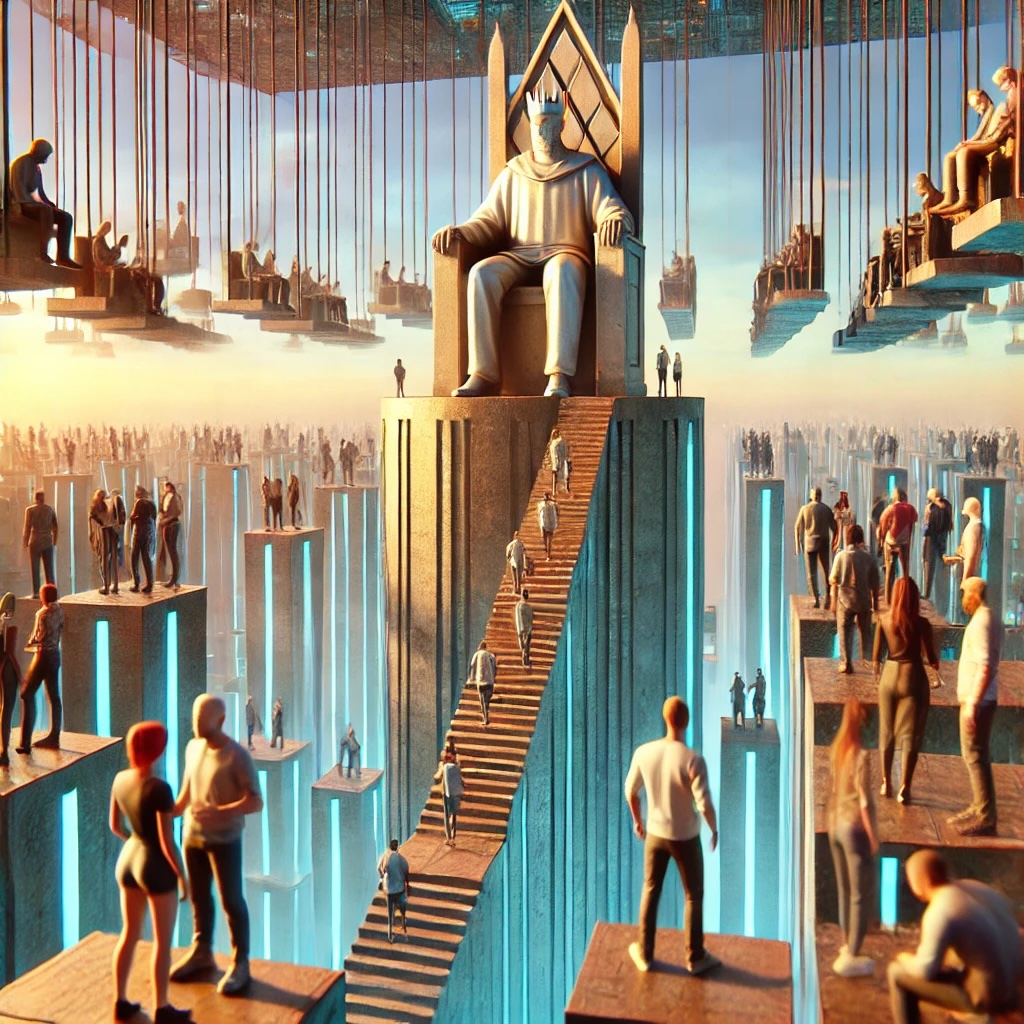
In VR, the spaces you design play a massive role in shaping how judgment unfolds. It’s not just about what looks cool—spaces create emotional reactions that can influence how we judge others. Think about a VR world where there’s a high throne, and everyone else is below, or a place where you keep climbing but never seem to reach the top. These designs subtly tell us who’s in control, who’s valuable, and who’s on the outside. They can push us into black-and-white thinking, reinforcing that sense of “us vs. them.”
But instead of rushing to fix these spaces, try this: seek out these types of worlds and really feel the judgment they provoke. Imagine yourself sitting on that high throne as a community leader, looking down on everyone else. What emotions start to bubble up? Do you feel a need to protect your status, to judge who belongs and who doesn’t? Do you feel distant from the people below, like you need to make tough decisions to keep things in order?
Now flip the script. What if you started at the top of the world and everyone else started below you, trying to climb up? What’s going on in your mind as they get closer? Is there a pull to kick people out to protect your spot? These kinds of spaces push us into a scarcity mindset, where judgment becomes less about inclusion and more about defending our place. If you’re the one at the top, it’s easy to fall into the mindset of, I worked hard to get here—why should everyone else get to join?
This is where judgment goes from being a helpful tool to something more toxic. Instead of seeing others as potential contributors, we see them as threats. These spaces amplify judgment and exclusion, making it easy to feel like you have to cut people out to keep things under control. By exploring these emotions in VR spaces and feeling the judgment that arises, you can start to understand how the design of a space impacts how we judge others and ourselves.
Actionable Tips by Role: Dealing with Judgment Urges
For Online Communities:
Community Leaders
• Pause and Reflect: When you feel the urge to make a big decision about removing or excluding a member, take a step back. Ask yourself: Is this decision coming from fear or a genuine desire to protect the community? Could this person’s perspective add something valuable if understood better?
• Invite Dialogue: Instead of making swift judgments, invite community feedback. Create open discussions about issues to gain different perspectives and foster inclusivity.
Community Builders
• Check Your Motivations: Before excluding members, ask yourself whether you’re doing it for the community’s growth or to maintain control. Could these members be nurtured to engage in a different way?
• Engage the Quiet Ones: Reach out directly to lurkers and ask what they’re learning or why they’re not engaging. This can help you better understand how to support them and increase participation.
Moderators
• Don’t Rush to Silence: When moderating conflicts, don’t be too quick to kick someone out or silence them. Instead, mediate and create space for dialogue that could reveal the root causes of the issue.
• Set Healthy Boundaries: Be firm, but not exclusionary. Ensure rules are applied fairly, and judgment isn’t being used as a tool for gatekeeping or pushing people out without giving them a chance.
Content Creators
• Create with Inclusivity in Mind: Make content that speaks to different levels of engagement in the community. Encourage silent members to engage through low-barrier calls to action, like polls or simple questions.
• Focus on Contribution, Not Competition: Avoid framing content as “who’s in, who’s out.” Instead, focus on collaboration and shared experiences to bring more people into the fold.
For VR Spaces:
Community Leaders
• Avoid Top-Down Leadership Designs: If you’re collaborating with world builders, ensure that leadership spots in VR spaces aren’t physically or visually isolated. Foster environments that encourage peer-to-peer connection rather than hierarchies.
• Feel the Space’s Impact: Before finalizing a VR space, put yourself in different roles within it. How do you feel when you’re “on top” versus “below”? Does it change how you judge others? Use this insight to adjust the design.
Community Builders
• Bring New Members Into VR Worlds: Give new members a tour of VR worlds and encourage exploration. Use these environments as tools for building inclusivity rather than allowing them to fuel exclusivity.
• Support Conversations in All Spaces: Ensure VR environments allow for small group discussions, giving space for quieter members to connect without feeling overshadowed by larger group dynamics.
Moderators
• Keep Your Eye on Community Dynamics: In VR, it’s easy for cliques to form around specific areas or roles. Be aware of how this affects judgment within the group. Step in when necessary to keep things balanced.
• Moderate Without Favoritism: Apply the same moderation rules to everyone in the space, whether they’re on the “throne” or in the crowd. This ensures fairness and reduces judgment-driven exclusion.
Content Creators
• Use Content to Break Hierarchies: Create VR experiences that involve all members, whether they’re active or passive participants. This reduces the feeling that only “visible” members contribute to the community.
• Engage the Silent Participants: Design content that allows lurkers to participate without feeling forced to interact directly. Think low-pressure activities like scavenger hunts or visual prompts that encourage subtle engagement.
World Builders
• Design for Equality, Not Exclusion: Avoid creating spaces that emphasize power hierarchies, like high thrones or unreachable platforms. Instead, create environments where everyone has access to shared experiences on an equal level.
• Focus on Connection: Build spaces that encourage group participation, with areas designed for conversations, collaboration, and interaction. Ensure there’s no “wrong side” of the space that makes people feel outcast or lesser.
Avatar Builders
• Design for Expression: Avatars can make or break how someone feels in a space. Build avatars that represent a wide range of identities and appearances, empowering users to express themselves without feeling judged or excluded.
• Reduce Status Symbols: Avoid creating exclusive or status-based avatar designs that signal hierarchy. Instead, focus on designs that encourage creativity and individuality across all levels of community participation.
Wrapping It Up
Judgment isn’t something we can—or should—eliminate. It’s a tool we use to make decisions and navigate our communities. But in times of conflict, judgment can shift from a helpful guide to something that divides and excludes. The key is to become aware of when judgment is rooted in fear and exclusion, and when it’s guiding us toward growth and connection.

In your VR communities, take the time to reframe judgment, look for opportunities to connect, and design spaces that encourage inclusivity. It’s about embracing diversity, not cutting it out. By doing this, you move from being a burned-out leader trying to “fix” everything (with “woke” policing or flipping into “wiped” and dropping everything) to becoming a co-creator of a space where everyone—lurkers, disruptors, and active members alike—has a role.
In the end, it’s all about connection. Even those who seem quiet or on the outside have something to offer if we take the time to listen. So, let’s keep learning, creating, and growing—together.
Leave a Reply