
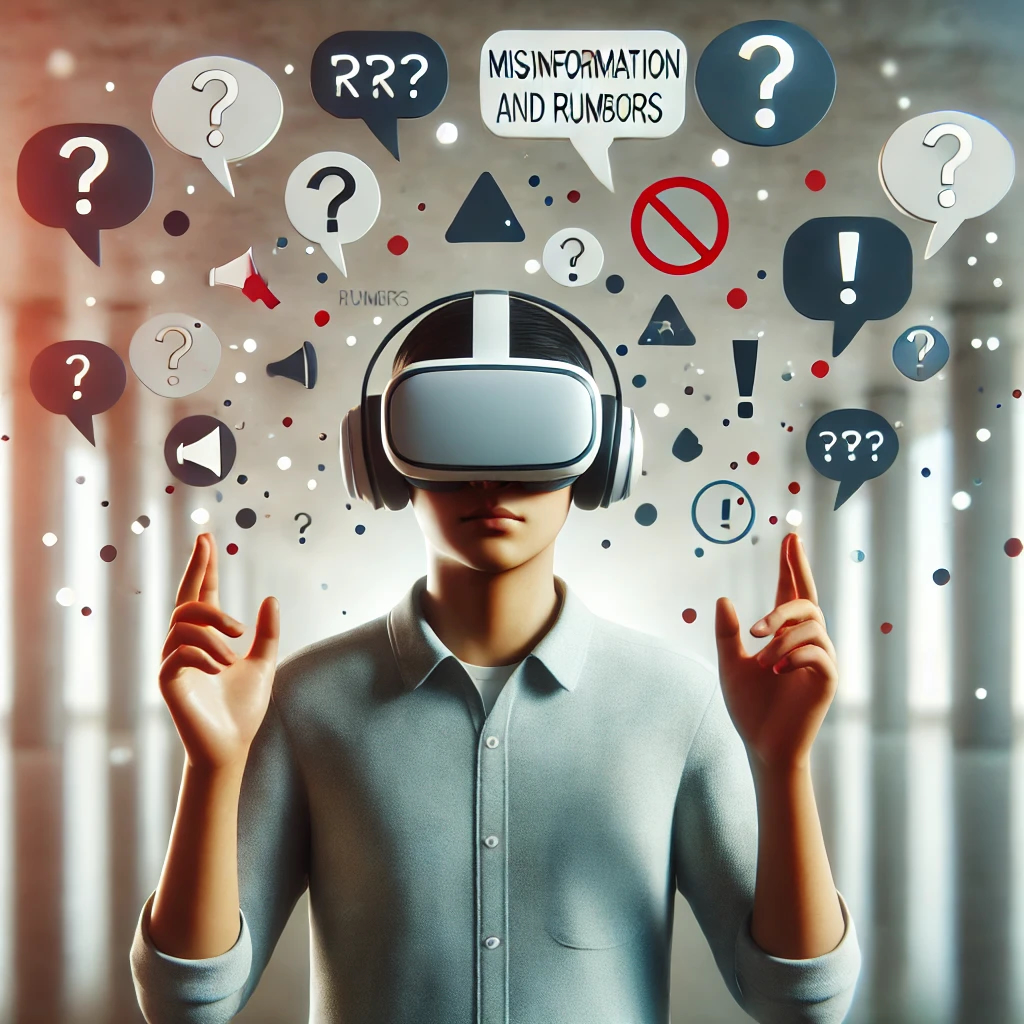
Dealing with Misinformation, Disinformation, and Malinformation
In your community, do you notice polarization due to conflicting beliefs or divisive information? For example, two groups within your VR platform repeatedly clash in discussions about climate change, with one side dismissing any evidence and the other growing increasingly frustrated, resulting in hostile interactions. If so, your group might be suffering from a combination of conflict avoidance and mis/dis/mal-information! First let’s look at why conflict resiliency is so important.
Conflict Resiliency vs. Conflict Resolution
In immersive virtual spaces, conflicts often arise from misunderstandings. It’s important to recognize that conflict avoidance is especially common in VR. Many users come from online gaming communities and social media, environments known for a type of escapism. Many people use VR to disconnect from real-world stress, so they may shy away from addressing conflicts directly, preferring to avoid tension rather than engage with it.
As a leader however, you can’t avoid all the conflict! While it’s tempting to have a knee jerk reaction with a goal of conflict resolution—solving individual problems as they arise (or muting, blocking, and banning members to avoid the problems altogether!)—the more sustainable practice is through conflict resiliency. Conflict resiliency isn’t just about addressing disputes; it’s about equipping your community with the tools to handle ongoing issues in ways that build trust, strengthen bonds, and encourage transparency.
In VR, this involves creating a culture that proactively identifies and addresses issues like misinformation before they escalate. Given that VR is an environment where people feel deeply immersed and emotionally invested, misinformation, disinformation, and malinformation can have a particularly strong impact. Building conflict resiliency means setting up frameworks that help your community stay strong in the face of these challenges.
Rather than simply focusing on fixing everything reactively—where issues are solved after they arise—conflict resiliency is a practice of building a space where problems can be debated, corrected, and understood in ways that promote continued engagement, learning, and collaboration. By fostering an open, proactive culture, you can help your community grow stronger and more connected, even in the face of conflict.
Understanding Misinformation, Disinformation, and Malinformation
In the context of VR, where users can have highly immersive and often emotionally charged experiences, it’s important to understand the key differences between these types of false information:
1. Misinformation: This is false information spread without harmful intent.

• Example: A user shares a VR experience about a “miracle” health cure based on outdated or incorrect data, not realizing that it’s misleading.
2. Disinformation: This involves deliberately false information, spread with the intent to deceive or manipulate.

• Example: A group creates a VR experience suggesting a political conspiracy, knowingly aiming to undermine trust in government institutions.
3. Malinformation: This is truthful information used out of context to harm, mislead, or incite division.

• Example: A VR world has crime statistics in a way that focuses only on specific demographics to reinforce negative stereotypes, stirring fear and mistrust.
In VR, these types of information can be even more persuasive than in traditional online environments. Immersive experiences blur the line between reality and fiction, making it easier for false or harmful narratives to stick .
Addressing Misinformation in VR and Social Media Spaces
To build a resilient community, you need strategies for preventing the spread of misinformation and addressing it constructively when it arises. This is particularly important in VR, where the immersive nature of experiences can make false information feel even more real.
1. Promoting Critical Thinking and Media Literacy
In VR, people experience content as if it were real. This makes it easier for misinformation to take root because users are not just hearing or reading false information—they are living it. Fostering critical thinking and media literacy can help your community better navigate this immersive environment.
• Example in VR: Host workshops or events where users explore the differences between factual and misleading content. For instance, you could create a VR experience where participants must identify misleading narratives presented in an immersive news scenario. Participants would then learn to ask critical questions, such as, “What is the source of this information?” and “How reliable is this claim?”
• Example in social media: Use online platforms linked to your VR community to encourage the sharing of fact-checked content. Set up forums where community members can share articles or simulations, but require users to back up claims with credible sources. You can use labels like “fact-checked” or “in need of review” to foster a culture of peer-reviewed sharing.
Did you catch the misinformation in this post? 1
2. Fact-Checking and Verification Mechanisms
In VR spaces, fact-checking doesn’t have to break immersion. Building ways for users to verify information on the go keeps the conversation grounded in truth without constantly having to “pull off the headset.”
• Example in VR: Add fact-checking prompts within simulations. Imagine a VR classroom where students are presented with a controversial historical event. As the experience unfolds, small informational cues pop up that encourage them to explore verified sources on the topic before making a final conclusion. This not only keeps users informed but teaches them to seek verification within the immersive environment.
• Example in social media: Encourage moderators to flag questionable posts for fact-checking. Set up channels where users can report misinformation, and have a team or automated system review the content to determine its accuracy. This approach ensures that even when a VR session ends, the conversation about the truth can continue online.
3. Empowering Moderators and Guides
Moderators play a key role in keeping your community safe from harmful content. In VR, moderators can do more than just remove bad actors—they can guide discussions, fact-check in real time, and create a culture of respect and inquiry.
• Example in VR: In social VR platforms like Horizon Worlds or VRChat, moderators can rotate and mingle through virtual spaces, providing guidance and clarification on contentious issues. If misinformation arises, moderators can interject with fact-based corrections or suggest further research, encouraging users to investigate more deeply rather than simply removing the content.
• Example in social media: Problem solve with moderators on tracking conversations that leave VR and continue online. For example, in BridgeMakers Discord, we have a section called BridgeShakers, where criticism of the community structure and debates about difficult things are welcome. Encourage follow-ups with factual information after a debate in VR, or recommend trusted resources that help clarify complex issues, ensuring the conversation is ongoing and educational.
4. Building Trust through Transparency
Transparency is key to building a resilient community. When users understand how and why content is moderated, they are more likely to trust the system and feel a part of it.
• Example in VR: Host open forums where users can discuss the moderation process. If a piece of misinformation is removed or flagged, make sure there’s a space for users to understand why that decision was made. Offer virtual town halls where community members can ask moderators or leaders about the decision-making process.
• Example in social media: Use a moderation log that’s publicly available to show what content was flagged for misinformation and why. This creates a sense of accountability and allows users to trust that the moderation process is fair and unbiased.
5. Encouraging Diversity of Thought
In VR, it’s important to cultivate a space where diverse viewpoints are valued, even when debunking misinformation. Encouraging thoughtful debate helps users explore issues in a respectful way while learning to distinguish between fact and fiction.
• Example in VR: Host debates on contentious issues within your VR world, allowing participants to take different sides on topics like climate change or election integrity. Ensure that the conversation is fact-based, and invite users to cite credible sources within the VR world itself. This approach encourages critical thinking while maintaining a respectful tone.
• Example in social media: Create a discussion forum where community members can safely debate controversial topics. Lay down ground rules that require users to present credible sources for their claims and maintain civility in dialogue. This helps participants feel safe sharing different perspectives without fear of hostility.
Identifying and Solving Information Challenges in Your Community
Misinformation, disinformation, and malinformation can affect every community differently, especially in immersive environments like VR. To tackle these issues effectively, it’s essential to first identify the specific problems your community is experiencing. Are falsehoods being spread unintentionally? Is deliberate disinformation sowing distrust? Or are real facts being weaponized to harm or manipulate others?
Once you pinpoint the type of information challenge your community faces, the next step is to respond with purpose-driven values. These values—like transparency, kindness, assertiveness, and critical thinking—become guiding principles for shaping how your community engages with information and each other. The values you choose to emphasize should be tailored to the unique challenges you’re addressing, allowing you to clean up toxicity and promote a healthier, more resilient environment.
Here’s a breakdown to help you assess your community and align with the values that will help counteract these issues:
1. Misinformation
Is misinformation (unintentional spread of false information) a regular occurrence in your community?
• Example: A user shares a VR experience promoting a “miracle” cure for a health condition, but the information is outdated or incorrect.
• Value: Scientific Inquiry. Encourage community members to fact-check medical or scientific claims. Organize virtual workshops where real experts, like healthcare professionals, can discuss common myths and help users understand how to verify health-related information.
2. Disinformation
Are there instances of deliberate disinformation (intentionally deceptive content)?
• Example: A political conspiracy group creates a VR world where a falsified election narrative is portrayed, deliberately attempting to manipulate public opinion.
• Values: Assertiveness and Vigilance. Train moderators to act quickly, flagging and removing disinformation while providing the community with credible counter-arguments. Encourage users to report suspicious content and make public statements to educate on the dangers of disinformation.
3. Malinformation
Is there a culture of malinformation (true but misleading content used harmfully)?
• Example: A VR world shares real crime statistics but uses them to reinforce negative stereotypes about specific demographics.
• Values: Empathy and Kindness. Create environments where diverse narratives are explored respectfully. Encourage empathy and understanding by hosting group discussions that give context to the data and highlight broader social issues.
To conclude: As a VR community builder, you’re no stranger to how fast rumors can spread! To keep your space healthy and thriving, it’s all about conflict resiliency—getting ahead of issues like misinformation (accidental falsehoods), disinformation (intentional lies), and malinformation (truths used harmfully). By fostering critical thinking, using fact-checking tools, empowering moderators, and promoting empathy and openness, you can tackle these challenges head-on. With values like transparency, kindness, and scientific inquiry guiding your efforts, you’ll create a braver and more vibrant VR community where members are informed, engaged, and ready to compassionately address any rumor that comes their way!
- Hint: how many fingers do we have?! ↩︎
Leave a Reply